
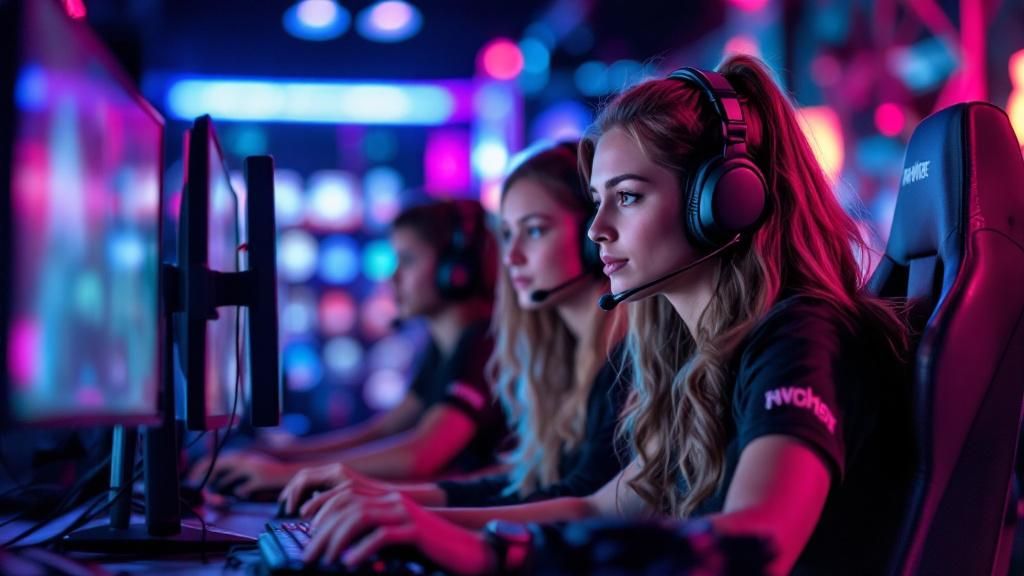
The professional gaming landscape has undergone a significant transformation, with women players now representing unprecedented participation levels in top-tier competitive events globally. This groundbreaking shift disrupts long-standing stereotypes and signals a fundamental change in the industry’s demographics. From combat titles to tactical FPS competitions, women are not merely taking part but excelling at the highest levels of play. This article examines the forces behind this unprecedented surge, celebrates the pioneering competitors spearheading the movement, and examines what this progression means for the trajectory of esports competition.
Removing Barriers in Competitive Gaming
The rise of female participation in professional gaming tournaments represents a pivotal turning point for the esports industry. For decades, competitive gaming remained a predominantly male-dominated field, with women encountering systemic barriers spanning cultural stereotypes to insufficient funding and support. However, recent years have witnessed a dramatic transformation as organisations increasingly recognise the talent and dedication of female players. Leading competitions now feature women performing at the highest standard, challenging preconceived notions about gaming capabilities and inspiring a new generation of aspiring female competitors worldwide.
This change has been catalysed by several converging factors, including greater media visibility, specialist women’s esports organisations, and grassroots initiatives promoting inclusivity. Sponsorship opportunities have grown increasingly available, whilst streaming platforms have democratised audience access to female athletes’ competitive play. Educational institutions have started developing esports courses that actively encourage female participation, creating pathways previously unavailable. The recognition of gaming as a valid professional pursuit has simultaneously dismantled conventional gender restrictions, permitting talent-driven competition to thrive and positioning esports as an ever more diverse and forward-thinking sector.
Growth Statistics and Market Growth
The rise in women’s involvement has been accompanied by impressive numerical expansion across the esports industry. Recent data reveals that women now comprise approximately 30% of professional esports competitors, a notable rise from just 5% a ten years prior. Major tournaments have seen exponential growth in female competitors, with prize funds dedicated to women’s competitions expanding substantially. This development demonstrates not only growing engagement but also increased funding from tournament organisers and sponsors identifying the commercial potential of inclusive gaming platforms.
Market analysts project continued expansion in the coming years, with forecasts indicating female participation could hit 40 per cent by 2026. Sponsorship revenue directed towards female gaming initiatives has grown three times over since 2019, engaging major technology companies and beverage brands. The emergence of dedicated women’s leagues and tournaments has created additional pathways for emerging competitors. This economic development shows that inclusivity and profitability are not in conflict, significantly reshaping how the industry manages talent development and audience engagement strategies.
Obstacles and Outlook
Despite significant progress, the professional gaming industry continues to grapple with major barriers hindering further advancement for female competitors. Persistent gender-based harassment, both online and within gaming communities, represents a substantial barrier to access and retention. Additionally, sponsorship opportunities continue to be unequally distributed, with female-led teams obtaining substantially lower investment than their male counterparts. Tournament organisers and industry stakeholders must prioritise developing safer and more inclusive settings to support long-term development and true equality within professional esports.
The infrastructure enabling female gamers demands substantial investment and development moving forward. Educational initiatives, mentorship programmes, and grassroots tournaments deliberately structured for rising female competitors could markedly boost participation rates all professional games. Furthermore, introducing tougher behavioural guidelines and enforcement mechanisms in competitive events would discourage discriminatory behaviour and build stronger esports communities. Collaborative alliances between prominent gaming organisations and recognised sports institutions could establish gaming credibility whilst setting industry benchmarks that safeguard all players.
Looking ahead, the trajectory for women’s involvement in professional gaming appears remarkably encouraging. As prominence expands and leading figures inspire younger generations, participation rates will probably keep rising substantially. Industry leaders recognising the commercial and ethical imperatives of inclusion are dedicating funding in women’s esports initiatives. With ongoing dedication to tackling structural barriers and fostering genuinely welcoming environments, professional gaming stands well positioned to be a truly inclusive arena where ability, commitment, and expertise determine success, regardless of gender.
